Heart Education Awareness Resource and Training through eLearning (HEARTe)
Frank is transferred to a monitored bed
Once Frank is settled in to the Coronary Care Unit (CCU) the cardiologist comes to speak to Frank and Betty.
This isn’t the best way to break bad news, see the additional information box to find out what we should consider when breaking bad news.
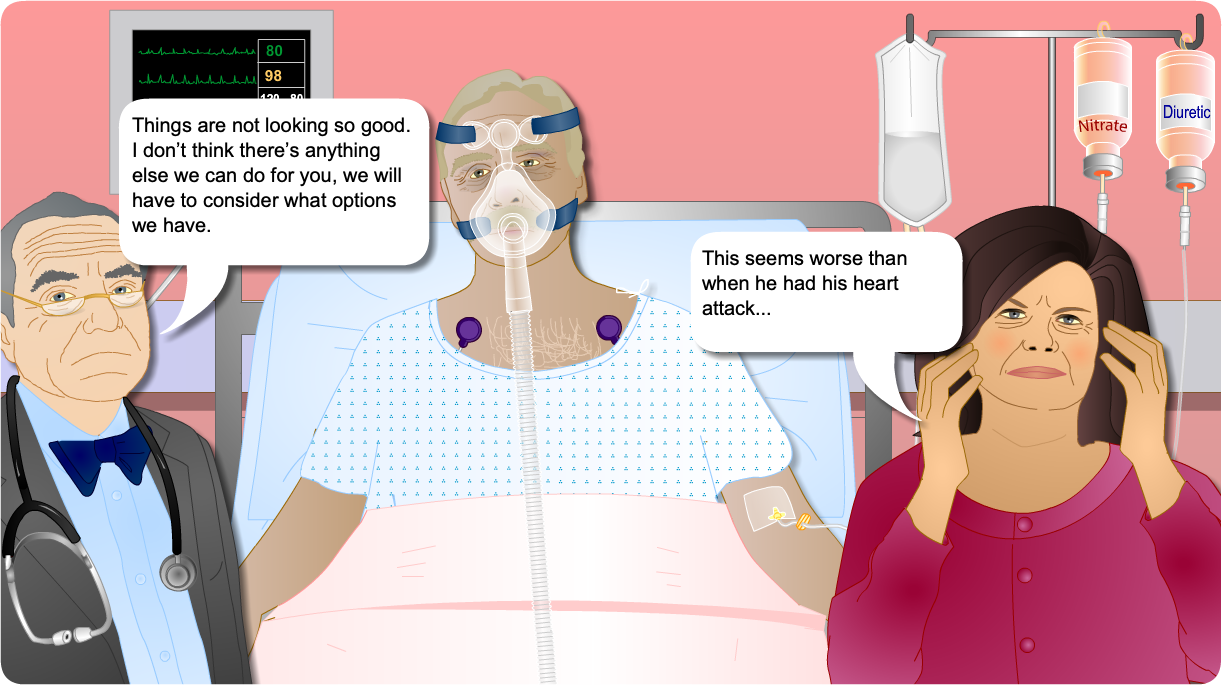
Picture of Frank in hospital bed wearing a CPAP mask, attached to an IV drip and tubes drug label of nitrate and another drug label of diuretic
Wife (sitting by bed): this seems worse than when he had his heart attack [head in hands].
Consultant Cardiologist: Things are not looking so good, I don’t think there’s anything else we can do for you, we will have to consider what options we have.
Additional Information
What should we consider when breaking bad news for patients and family:
Ensure there is an quiet environment where they are not going to be disturbed
Tailor information to individual needs.
Check their understanding
Elicit and explore reactions to the information given
Determine how much they want to participate in decision-making
Discuss treatment options so that the they understands the implications
Enable them to follow agreed decisions about treatment
Identify, offer, discuss and signpost relevant further support (e.g. psychology, information resources, support groups) that they and relatives/carers might find helpful
Additional useful reference:
Buckman, R. (1992) How to break bad news: a guide for healthcare professionals. The John Hopkins University Press. Maryland. U.S.A.