Early mobilisation is an integral part of Joan’s rehabilitation. click on the grey toolbar or arrows to advance through the slides.
Category: Physical rehabilitation
Benefits of early mobilisation
Q. Early mobilisation has a positive impact on which of the following:
Click view text alternative for more explanation of answers.
Early mobilisation
Early mobilisation aims to make patients as active as possible, early after their stroke, if medically stable. Implementation of early mobilisation is the responsibility of all members of the multidisciplinary team (MDT) and should, when appropriate include family members. It comprises activities such as moving in bed; sitting out of bed; standing; walking; washing; dressing and eating. These activities should occur throughout the day.
The admission to a stroke unit, with staff who have specialist knowledge and skills in the management of patients post stroke, offers the opportunity to achieve this.
What do you think the benefits of being mobilised early after stroke might be?
Case 1: Mrs Joan Poplar
Introduction
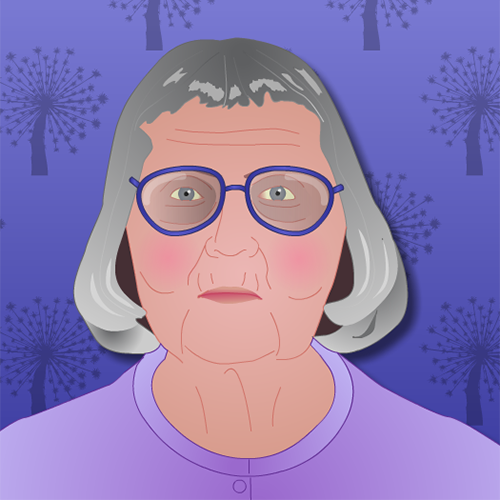
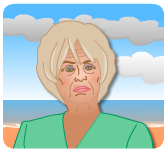
Mrs Joan Poplar is an 80 year old lady who was found collapsed by her husband when he returned from buying the morning papers. She was previously very fit and active, regularly playing bowls with her husband and enjoyed being involved with her grandchildren and great grandchildren.
She was admitted to hospital with a left hemisphere lacunar infarct and a right sided weakness. She is now in the stroke unit and is two days post stroke. Joan is able to sit up without support and has some movement of her right hip and knee, but has no activity in her right arm.
Patient scenarios
There are four patient scenarios in this module which will cover four aspects of physical rehabilitation after stroke; early mobilisation, spasticity management, patient-centred goal setting and rehabilitation in the community.
Early mobilisation
Goal setting
Spasticity management
Community rehabilitation
Learning points
On completion of this module you should have an understanding of the common physical problems after stroke and have the means to address these as part of multidisciplinary rehabilitation.
You will learn about:
- The common components of physical management
- Early mobilisation following stroke
- Ways of managing spasticity
- Orthotic devices which may be used to assist walking
- The use of goal setting in clinical practice
- Physical fitness and fatigue management
- The issues that people face in the community
Introduction

Module Authors
Module lead
Mark Smith, Consultant Physiotherapist & Strategic Lead, Allied Health Professionals,
Stroke Rehabilitation, NHS Lothian
Group members
Jane Shiels, Physiotherapy Rehabilitation Services Lead, NHS Lothian
Karis Georgeson, Occupational Therapist, NHS Shetland
Katherine Wilson, Specialist Physiotherapist, Stroke Rehabilitation, NHS Lothian
Dr Katie Thomson, Occupational Therapy Lecturer, Glasgow Caledonian University
Katrina McCormick, Clinical eLearning Project Manager, Chest Heart & Stroke Scotland
Lynsey McAlpine Clinical Specialist Physiotherapist, Stroke Rehabilitation, NHS Fife
Margo Martin, Chest Heart & Stroke Scotland Stroke Nurse, NHS Fife
Serena Battistoni, eLearning Interactive Content Developer, Chest Heart & Stroke Scotland
This module was originally developed by:
Group Lead: Mark Smith, Consultant Physiotherapist, NHS Lothian
Group Members: Gillian Dowie, Deputy Charge Nurse, NHS Lothian
Trish Elder, Charge Nurse, NHS Lothian
Linda Gibson, Senior Occupational Therapist, City of Edinburgh Council
Claire Ritchie, AHP Rehabilitation Consultant, NHS Lanarkshire
Jane Shiels, Senior Physiotherapist, NHS Lothian
Critical Readers: Melanie Campbell, Occupational Therapist, NHS Lanarkshire
Jane Chalmers, Lead Stroke Nurse, CHSS / NHS Fife
Prof Martin Dennis, Professor of Stroke Medicine, University of Edinburgh
Sarah Garrioch, Physiotherapist, NHS Lothian
Irene Nicol, Outpatient Coordinator, NHS Lothian
Margaret Pope, Staff Nurse, NHS Lothian
07: Physical Rehabilitation
On completion of this module you should have an understanding of the common physical presentations after stroke, how they can impact on life and means of addressing them therapeutically to improve physical function as part of multidisciplinary rehabilitation.
The answers to all the test questions are contained within the module. This information may be provided in ‘Additional Information’ on some of the pages.